

The core design principle
TMP solves this with a separation of concerns: the protocol decides what sponsored content is available and relevant, and the platform’s LLM decides how to present it. The buyer never touches the user experience. The platform never builds custom ad logic. This is what makes TMP a mediation protocol rather than an ad injection system. Multiple buyer agents submit offers through a standard interface, and the platform retains editorial control over how — and whether — recommendations appear.Step 1: The demand problem
Every ad surface before AI assistants works the same way: a user loads a page, a bid request broadcasts context to buyers, an ad server renders a creative in a defined slot. AI assistants break all three assumptions:- No defined slot — sponsored content is woven into the response text
- No bid request — the conversation is private and ephemeral, not a crawlable URL
- No ad server — the platform’s LLM generates the response
Step 2: Bringing demand to the context
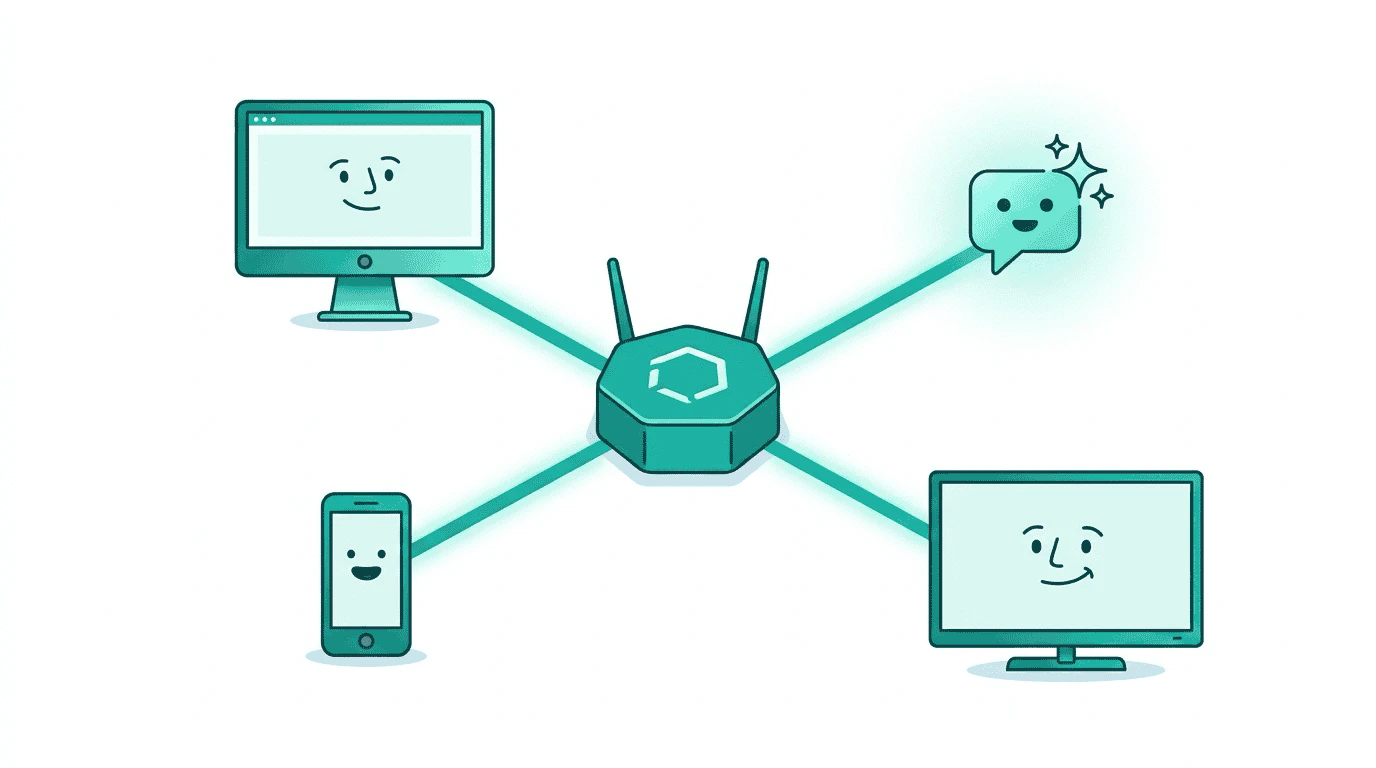
- Property type:
ai_assistant - Placement:
chat-inline-recommendation— a conversational context where the LLM can incorporate sponsored recommendations
Step 3: Classified signals instead of bid requests
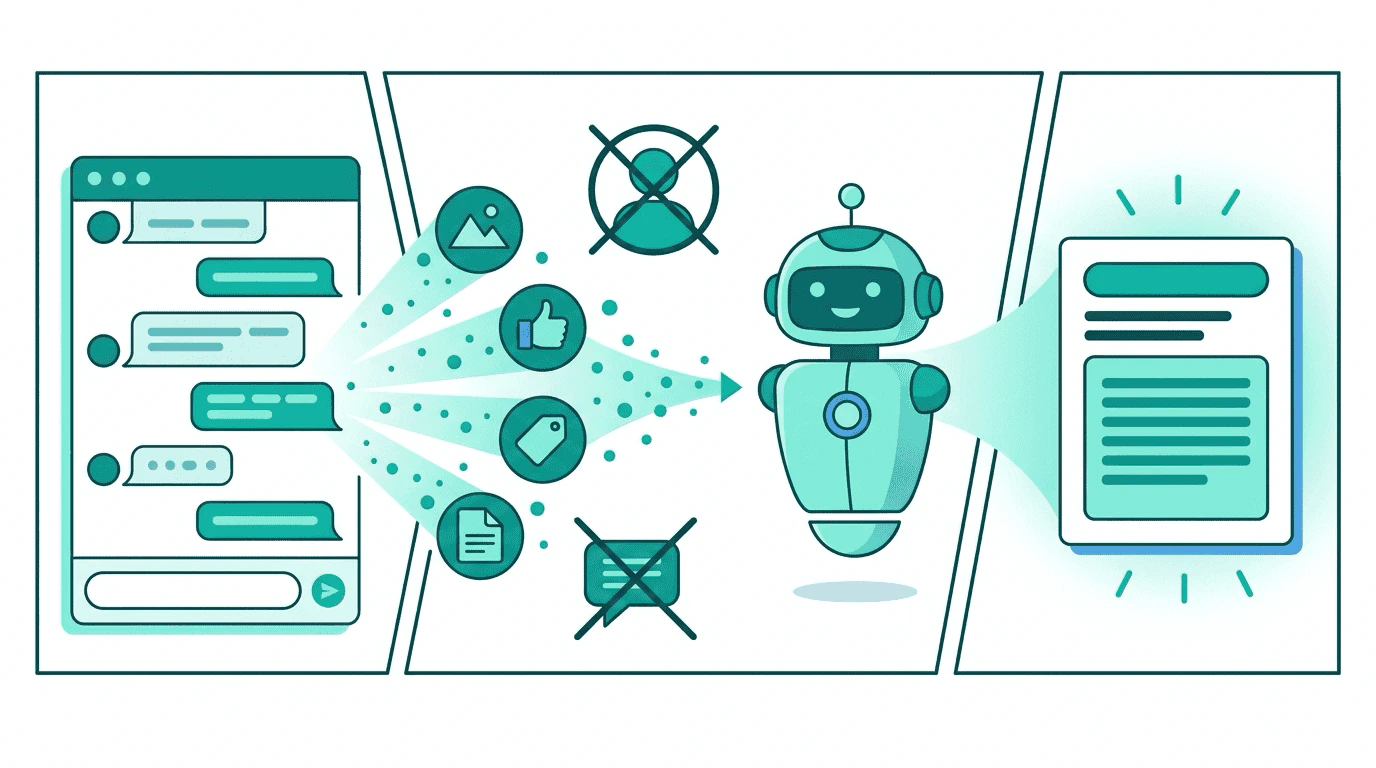
Context Match request for a conversation turn
Context Match request for a conversation turn
artifact_refs — conversation turns are ephemeral. The context_signals carry the classified output. The summary field is especially useful for LLM-native buyers that evaluate relevance semantically. A platform that operates in a trusted execution environment could alternatively send the full conversation as an artifact — the publisher controls the disclosure level.
Priya chose full recommendation for StreamHaus’s assistant:
Context Match response with inline creative manifest
Context Match response with inline creative manifest
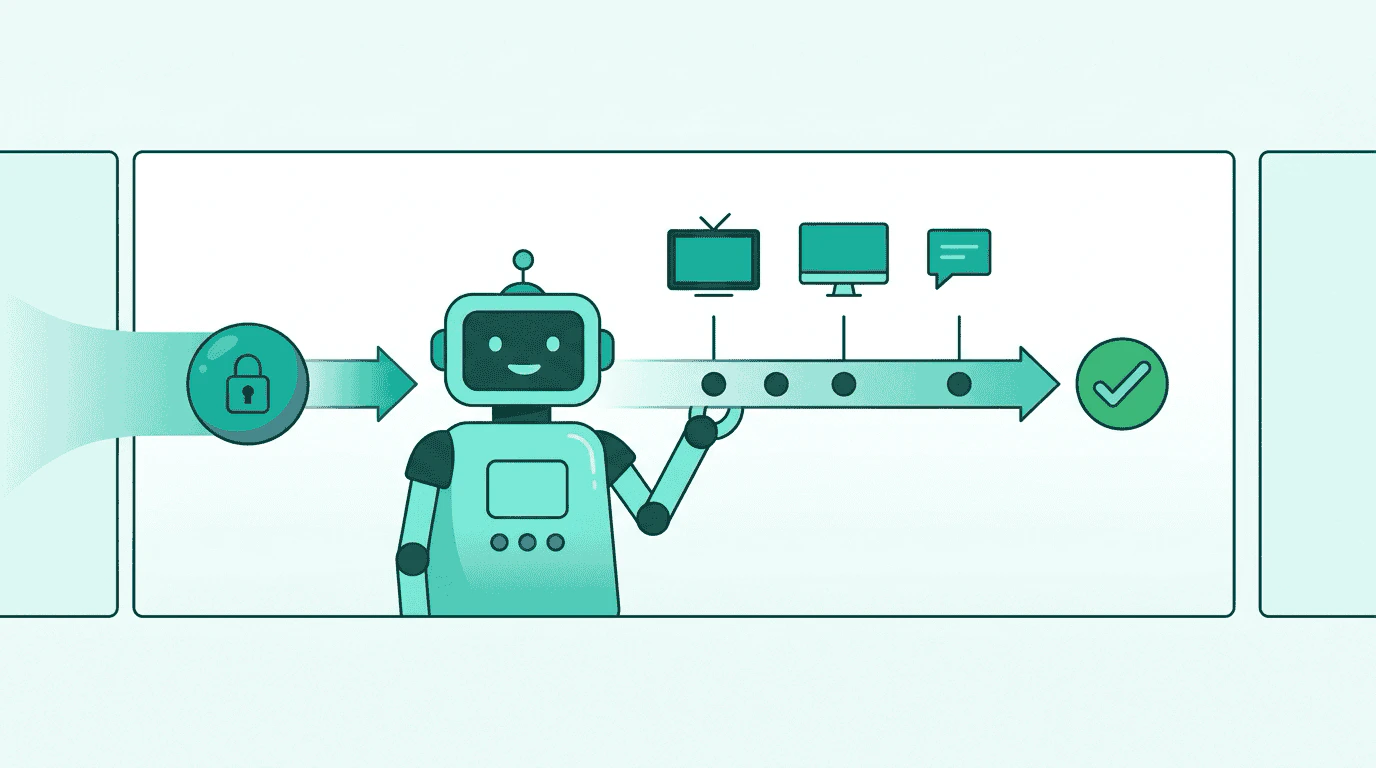
summary helps the platform judge relevance before deciding whether to incorporate the offer. The body gives the LLM factual product details it can weave into a natural response.Step 4: Frequency caps cross every surface
Step 5: The platform controls the experience
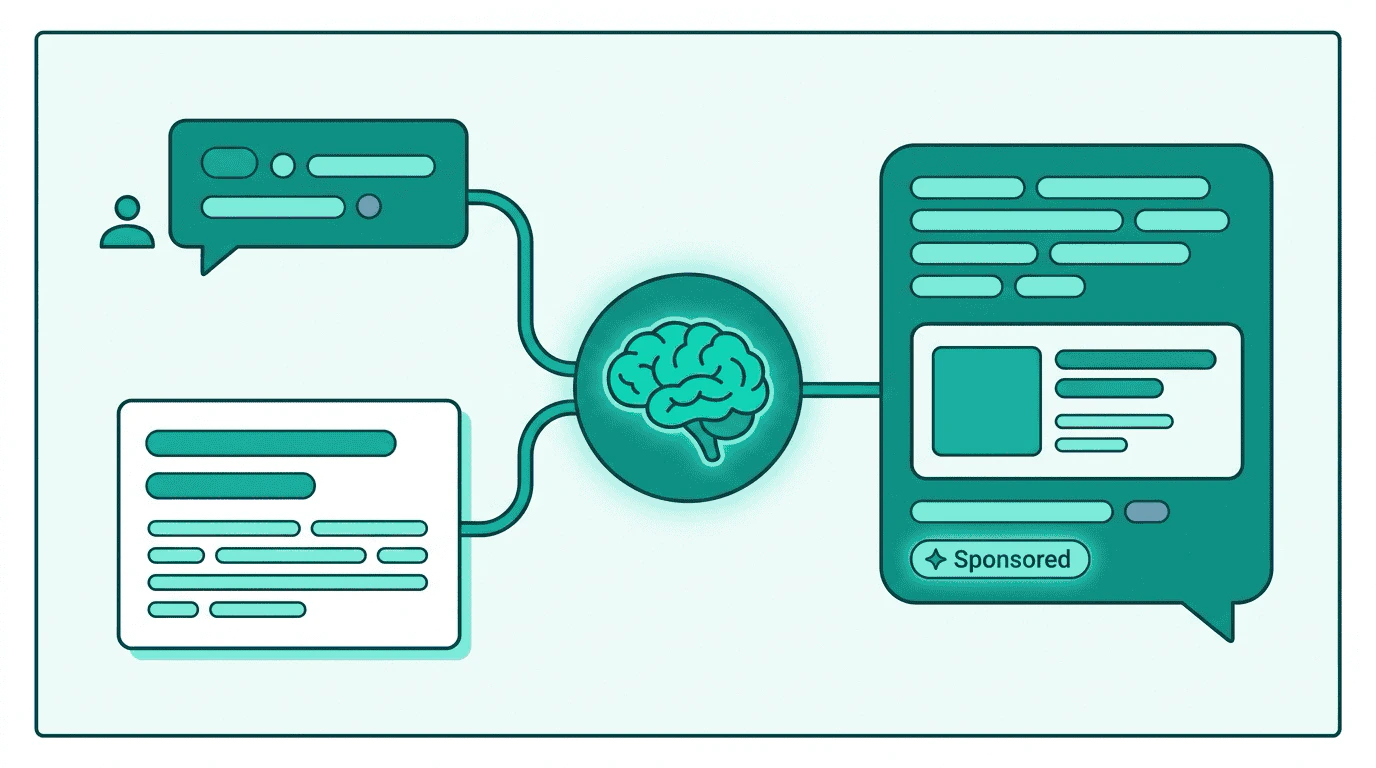
“For rocky terrain with good ankle support, you’ll want a shoe with a rock plate and higher collar. The Trail Pro 3000 is designed exactly for this — it has a full rock plate to protect against sharp rocks and an ankle-height collar for stability on technical terrain. The Vibram outsole with 4mm lugs gives you solid grip on loose surfaces. You might also look at…” Sponsored recommendation from Acme OutdoorThe LLM didn’t copy the creative manifest verbatim. It wove the product details into a natural recommendation that addressed the user’s specific question. The platform applied its own editorial policy — a sponsored content label, natural integration, and continuation with non-sponsored alternatives. Regulatory requirements around AI-generated sponsored content (FTC disclosure, EU AI Act) are the platform’s responsibility, enforced through their LLM integration, not the protocol.
Step 6: What this unlocks
Multi-turn conversations
Each user message triggers a fresh Context Match evaluation. The platform decides when to re-evaluate — recommended triggers are topic shift (detected by the platform’s classifier), explicit product interest (“tell me more about…”), or session timeout (more than 5 minutes of inactivity). Platforms may cache the most recent Context Match response and skip re-evaluation for follow-up questions on the same topic. This reduces latency and provider load without affecting ad quality. When multiple buyers return offers for the same conversation turn, the platform ranks by relevance to the conversation — not by price. This is mediation, not an auction. An impression occurs when the LLM incorporates the creative manifest into its response. Follow-up questions about the recommended product (“where can I buy those?”) are engagement events, not new impressions. Latency. TMP’s sub-50ms round-trip is hidden within the LLM’s generation time (typically 1-3 seconds). The platform sends the Context Match request while preparing the LLM prompt, so TMP adds no perceptible delay to the user experience.Go deeper
TMP for AI assistants
Technical reference for AI assistant integration — request/response formats, context signals, activation patterns.
Context and identity
How the two-operation model works across all surfaces, with concrete examples.
TMP overview
Cross-publisher frequency capping walkthrough — how TMP solves the execution gap.
Specification
Authoritative message types, field tables, and conformance requirements.